






 Original Documents
Chapter Three: Indian Relations
For as long as any of them could remember, the Lenape had lived in their homeland, Lenapehoking, the present-day greater Delaware Valley, including eastern Pennsylvania, New Jersey, Delaware, and southeastern New York. The Lenape shared the same beliefs and culture, spoke different but related dialects, visited each other and intermarried. The Lenape identified themselves by where they lived.

The people who lived in the areas near the Delaware Bay and ocean took the name Unalachtigo, which means "the people who live near the ocean." Farther up the Lenapewihittuck (known today as the Delaware River) lived the Unami, or "the up river people." The Minsi or Munsi (also called Minisink by some Europeans) "the people from the stony country," lived in the northern regions of the Lenape homeland.
Beside the Lenape, there were also other indigenous people with different cultures living in the area. In the direction of Muxumsa Wunchene'wank (Grandfather West) lived the Minquas; above the Munsi, in the direction of Muxumsa Lowane'wank (Grandfather North), lived the powerful Iroquois.
The Lenape believed that they were kin to all creation. All life in Lenapehoking was possible only through the interaction between the Creator and manitous (spirit kin). Women worked in gardens with the Corn Mother and her sisters (beans and squash) to provide food for the people. When men hunted, they asked the Mesingw, or "Masked Keeper," to help them track down game. And when they killed an animal, they thanked their kinsman for its willing sacrifice to provide them with meat. So, just as the manitous and animal kinsmen shared with the people to provide them with life and sustenance, it was the duty of the Lenape to share with each other and guests. Thus, the Lenape welcomed newcomers with food and gifts. To show their appreciation in return, guests were expected to share what they had with their Lenape hosts.
When the Swannekins, that was the Lenape name for the "saltwater people" or Europeans, arrived in Lenapehoking, they welcomed the strangers with gifts, food, and the land that they requested. But the Swannekins did not reciprocate as expected. When the Dutch mistreated women of the Sickoneysink band, the Lenape destroyed the Dutch trading post. In the early 1630s, angry Lenape warriors attacked Swanendale (near present-day Lewes, Delaware), murdered the Dutch settlers and burned the fort to the ground.
The destruction of Swanendale led the Dutch West India Company to give up on the idea of settling and trading in the South River (their name for the Delaware River) and instead focused their attention on their trading posts on the North River (their name for the Hudson River), New Amsterdam (present-day New York City) and Fort Orange (present-day Albany, New York).
 In 1638, with the Dutch gone, the southern Lenape welcomed the newly-arrived Swedes to stay in their homeland and trade with them. Like the Dutch, the Swedes envisioned great profits from the fur trade with the Lenape. But the beaver and other fur-bearers in the region were already scarce due to overhunting. When the Lenape did not provide them with high-quality furs, Swedish officials treated them with contempt. Lenape irritation with these newcomers was increased by the fact that the Swedes did not act as good guests and regularly provide their hosts with gifts to show their appreciation for letting them stay in their river valley. The result was frustration and anger that the Lenape expressed through occasional acts of violence such as tearing down fences, killing livestock and murdering settlers. Some Lenape leaders discussed the possible destruction of the Scandinavian colony a year before the Dutch came to conquer New Sweden and reclaim the South River in 1655.
The Lenape's general mistrust of Europeans changed after the arrival of members of the Religious Society of Friends (also known as Quakers or Friends) from the British Isles in 1682. The two groups shared similar ideas about the world around them. Just as the Lenape believed that they were kin to all things, Quakers believed in universal brotherhood derived through the spark of the divine, or Inner Light, within all people. Both people lived their faith everyday.
The founder of the Quaker movement, George Fox, wrote his fellow believers that they should "walk in the Light, Life and Power and Wisdom of God" and "wait all in the Light for the Wisdom, by which all things were made. With it, use all the Lord's creatures to his glory, for which end they are created." Friends were also charged with living a Christ-like life, which meant they were to be gentle, loving, kind and peaceful.
William Penn saw to it that the relationship between the Quakers and Lenape was established on the basis of mutual affection, respect and understanding. Even before he came to his colony, he wrote to them to explain his faith and its guiding principles (especially pacifism), get their permission to settle in their homeland, and tell them about his mission.
To demonstrate his sincerity, Penn sent gifts of trade goods to the Lenape. The proprietor charged the deputies he sent before him to have a translator read his letter and distribute the presents to his soon-to-be neighbors. According to Lenape culture, this was right. This was how it was done. This kind of sharing was proper behavior for someone who truly was a brother. Penn's generosity and kindness showed them that he appreciated and understood them.
Penn had a vision for his colony. Pennsylvania was to be a "Holy Experiment." It was to be a place where Quakers and other dissenters could worship freely. Pennsylvania was to be a new society, not just a transplanted European society, but one in which the Native American inhabitants were also included. The charter for Pennsylvania explained clearly that part of the Quaker mission in America was to bring the Indians "to the love of Civil Society and Christian Religion... by Gentle and just measures." In other words, Friends settled in the Delaware Valley were to show the Lenape and other Indians what true Christians were like. Additionally, the founder of the Quaker movement believed that his fellow believers were to travel to Indian villages and preach to them (which they did). Based on the Inner Light within them, the Indians would be moved to convert and become a part of this new, emerging society.
When Penn arrived in his colony in late October 1682, he reinforced the Lenape's favorable view of him. He took great pains to deal fairly, generously and honestly with the native inhabitants of the land that he claimed as his own. He personally met with them to purchase land, a practice memorialized in his legendary meeting with the Lenape along the banks of the Delaware River at Penn Treaty Park. The proprietor also made a genuine effort to understand the Lenape by learning their language. At their invitation, he traveled to their villages and enjoyed their hospitality. In 1701, he traveled out to the Susquehanna River to meet with the Lenape and Susquehannocks who lived at the Conestoga Indian Town.
During his stays in his colony, Penn enjoyed, attended and participated in many Lenape councils, feasts, festivals, recreational activities, and religious services. According to local legends, he ran foot races and wrestled with Lenape warriors. Penn's interaction with the Indians conveyed a genuine affection for them and they felt the same way about him, calling him "Brother Miquon." Miquon was the Lenape word for feather quill, which the English called a pen. His activities with the Lenape had such a significant impact that they have become part of oral histories of the Lenape, Shawnee and Iroquois as well as the white settlers' history of the region.
When Penn was preparing to leave his colony for the second and final time in 1701, a large delegation of Lenape, Conestoga, Shawnee, Conoy and others came toPennsbury to wish him well. The proprietor made himself the center, the heart and soul of Indian relations in his province. He believed that the settlers and government of Pennsylvania would continue the relationship of mutual admiration, good will, and respect. In his absence, he delegated the oversight of Indian affairs to trusted associates. Unfortunately not everybody who settled in Pennsylvania shared the same loving sentiments about the Native Americans as Penn had. More interested in worldly matters than their founder's vision, some Quakers and other settlers became obsessed with power, wealth and the expansion of their own economic opportunity.
The desire for money led some Quakers to sell or trade liquor to their Indian neighbors, in direct violation of agreements made with Penn and in violation of religious advice from the Philadelphia Yearly Meeting, the preeminent Quaker authority in the Delaware Valley. Some Quaker fur traders cheated their Indian suppliers. Fraud and trickery led to complaints from Lenape and Conestoga in conferences with Pennsylvania officials. Sometimes their concerns were addressed by Penn's heirs and successors and sometimes not. If expansion and wealth meant subtle, and sometimes not so subtle, violations of the founding principles, then so be it.
In 1737, Pennsylvania authorities perpetrated a huge fraud on the Lenape to acquire 1,200 square miles of their land. After this so-calledWalking Purchase, relations between Indians and the government of Pennsylvania hit rock bottom. Although provincial and Native-American negotiators like Conrad Weiser and Shikellamy were able to maintain peace on the frontier through a complex game of diplomacy, the infamous Walking Purchase and subsequent white settlement led to ever increasing hostility and resentment among the Lenape. Even Moses Tunda Tatamy and other Native Americans who worked for the Pennsylvania government were profoundly troubled by the fraudulent land grab. It seemed to the Lenape that Brother Miquon's children, both figurative and literal, had turned their backs on them.
Attacks on Pennsylvania settlers by Lenape warriors in the French and Indian War (1754-1763) were the inevitable result. Although concerned Quakers formed the "Friendly Association for Regaining and Preserving Peace with the Indians," and other private organizations to restore the friendship and trust of the Lenape and others in the 1750s, their efforts were too little and too late. The warm and trusting relationship that William Penn had established with his Lenape counterparts was gone forever.
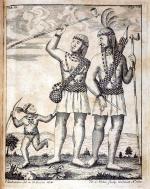
Indian Family, from Kort abeskrifning om beskrifning om provincien Nya...
The people who lived in the areas near the Delaware Bay and ocean took the name Unalachtigo, which means "the people who live near the ocean." Farther up the Lenapewihittuck (known today as the Delaware River) lived the Unami, or "the up river people." The Minsi or Munsi (also called Minisink by some Europeans) "the people from the stony country," lived in the northern regions of the Lenape homeland.
Beside the Lenape, there were also other indigenous people with different cultures living in the area. In the direction of Muxumsa Wunchene'wank (Grandfather West) lived the Minquas; above the Munsi, in the direction of Muxumsa Lowane'wank (Grandfather North), lived the powerful Iroquois.
The Lenape believed that they were kin to all creation. All life in Lenapehoking was possible only through the interaction between the Creator and manitous (spirit kin). Women worked in gardens with the Corn Mother and her sisters (beans and squash) to provide food for the people. When men hunted, they asked the Mesingw, or "Masked Keeper," to help them track down game. And when they killed an animal, they thanked their kinsman for its willing sacrifice to provide them with meat. So, just as the manitous and animal kinsmen shared with the people to provide them with life and sustenance, it was the duty of the Lenape to share with each other and guests. Thus, the Lenape welcomed newcomers with food and gifts. To show their appreciation in return, guests were expected to share what they had with their Lenape hosts.
When the Swannekins, that was the Lenape name for the "saltwater people" or Europeans, arrived in Lenapehoking, they welcomed the strangers with gifts, food, and the land that they requested. But the Swannekins did not reciprocate as expected. When the Dutch mistreated women of the Sickoneysink band, the Lenape destroyed the Dutch trading post. In the early 1630s, angry Lenape warriors attacked Swanendale (near present-day Lewes, Delaware), murdered the Dutch settlers and burned the fort to the ground.
The destruction of Swanendale led the Dutch West India Company to give up on the idea of settling and trading in the South River (their name for the Delaware River) and instead focused their attention on their trading posts on the North River (their name for the Hudson River), New Amsterdam (present-day New York City) and Fort Orange (present-day Albany, New York).
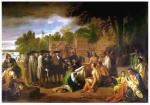
Penn's Treaty with the Indians, by Benjamin West, 1771-72.
The Lenape's general mistrust of Europeans changed after the arrival of members of the Religious Society of Friends (also known as Quakers or Friends) from the British Isles in 1682. The two groups shared similar ideas about the world around them. Just as the Lenape believed that they were kin to all things, Quakers believed in universal brotherhood derived through the spark of the divine, or Inner Light, within all people. Both people lived their faith everyday.
The founder of the Quaker movement, George Fox, wrote his fellow believers that they should "walk in the Light, Life and Power and Wisdom of God" and "wait all in the Light for the Wisdom, by which all things were made. With it, use all the Lord's creatures to his glory, for which end they are created." Friends were also charged with living a Christ-like life, which meant they were to be gentle, loving, kind and peaceful.
William Penn saw to it that the relationship between the Quakers and Lenape was established on the basis of mutual affection, respect and understanding. Even before he came to his colony, he wrote to them to explain his faith and its guiding principles (especially pacifism), get their permission to settle in their homeland, and tell them about his mission.
To demonstrate his sincerity, Penn sent gifts of trade goods to the Lenape. The proprietor charged the deputies he sent before him to have a translator read his letter and distribute the presents to his soon-to-be neighbors. According to Lenape culture, this was right. This was how it was done. This kind of sharing was proper behavior for someone who truly was a brother. Penn's generosity and kindness showed them that he appreciated and understood them.
Penn had a vision for his colony. Pennsylvania was to be a "Holy Experiment." It was to be a place where Quakers and other dissenters could worship freely. Pennsylvania was to be a new society, not just a transplanted European society, but one in which the Native American inhabitants were also included. The charter for Pennsylvania explained clearly that part of the Quaker mission in America was to bring the Indians "to the love of Civil Society and Christian Religion... by Gentle and just measures." In other words, Friends settled in the Delaware Valley were to show the Lenape and other Indians what true Christians were like. Additionally, the founder of the Quaker movement believed that his fellow believers were to travel to Indian villages and preach to them (which they did). Based on the Inner Light within them, the Indians would be moved to convert and become a part of this new, emerging society.
When Penn arrived in his colony in late October 1682, he reinforced the Lenape's favorable view of him. He took great pains to deal fairly, generously and honestly with the native inhabitants of the land that he claimed as his own. He personally met with them to purchase land, a practice memorialized in his legendary meeting with the Lenape along the banks of the Delaware River at
Penn Treaty Park. The proprietor also made a genuine effort to understand the Lenape by learning their language. At their invitation, he traveled to their villages and enjoyed their hospitality. In 1701, he traveled out to the Susquehanna River to meet with the Lenape and Susquehannocks who lived at the Conestoga Indian Town.During his stays in his colony, Penn enjoyed, attended and participated in many Lenape councils, feasts, festivals, recreational activities, and religious services. According to local legends, he ran foot races and wrestled with Lenape warriors. Penn's interaction with the Indians conveyed a genuine affection for them and they felt the same way about him, calling him "Brother Miquon." Miquon was the Lenape word for feather quill, which the English called a pen. His activities with the Lenape had such a significant impact that they have become part of oral histories of the Lenape, Shawnee and Iroquois as well as the white settlers' history of the region.
When Penn was preparing to leave his colony for the second and final time in 1701, a large delegation of Lenape, Conestoga, Shawnee, Conoy and others came to
Pennsbury to wish him well. The proprietor made himself the center, the heart and soul of Indian relations in his province. He believed that the settlers and government of Pennsylvania would continue the relationship of mutual admiration, good will, and respect. In his absence, he delegated the oversight of Indian affairs to trusted associates. Unfortunately not everybody who settled in Pennsylvania shared the same loving sentiments about the Native Americans as Penn had. More interested in worldly matters than their founder's vision, some Quakers and other settlers became obsessed with power, wealth and the expansion of their own economic opportunity.
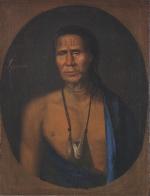
Gustavus Hesselius, Portrait of Lapowinsa, 1735.
The desire for money led some Quakers to sell or trade liquor to their Indian neighbors, in direct violation of agreements made with Penn and in violation of religious advice from the Philadelphia Yearly Meeting, the preeminent Quaker authority in the Delaware Valley. Some Quaker fur traders cheated their Indian suppliers. Fraud and trickery led to complaints from Lenape and Conestoga in conferences with Pennsylvania officials. Sometimes their concerns were addressed by Penn's heirs and successors and sometimes not. If expansion and wealth meant subtle, and sometimes not so subtle, violations of the founding principles, then so be it.
In 1737, Pennsylvania authorities perpetrated a huge fraud on the Lenape to acquire 1,200 square miles of their land. After this so-called
Walking Purchase, relations between Indians and the government of Pennsylvania hit rock bottom. Although provincial and Native-American negotiators like Conrad Weiser and Shikellamy were able to maintain peace on the frontier through a complex game of diplomacy, the infamous Walking Purchase and subsequent white settlement led to ever increasing hostility and resentment among the Lenape. Even Moses Tunda Tatamy and other Native Americans who worked for the Pennsylvania government were profoundly troubled by the fraudulent land grab. It seemed to the Lenape that Brother Miquon's children, both figurative and literal, had turned their backs on them.Attacks on Pennsylvania settlers by Lenape warriors in the French and Indian War (1754-1763) were the inevitable result. Although concerned Quakers formed the "Friendly Association for Regaining and Preserving Peace with the Indians," and other private organizations to restore the friendship and trust of the Lenape and others in the 1750s, their efforts were too little and too late. The warm and trusting relationship that William Penn had established with his Lenape counterparts was gone forever.

