


Mouse over for marker text
Name:
George Washington
Region:
Lake Erie Region
County:
Erie
Marker Location:
US 19 in Waterford
Dedication Date:
November 1946
Behind the Marker
George Washington was an inexperienced militia officer when he encountered Captain Jacques Legardeur de Saint-Pierre, the French commander of  Fort LeBoeuf, in late 1753. Washington's mission was to deliver a
  letter from Robert Dinwiddie, the lieutenant governor of Virginia, who spoke for the British Crown's interests in the Ohio Valley. Dinwiddie and Washington also had financial reasons for warning the French out of the Ohio Valley. Both were among the gentlemen-speculators wishing to profit from land sales to the settlers in this region once the British secured their claim to it.
Washington's trip to Fort LeBoeuf fromLogstown had been through difficult terrain as winter set in on the Allegheny frontier. His small party was accompanied by only four Indians, from the Forks of the Ohio (including Tanacharisson), hardly an impressive show of native support for the British cause. By Washington's own account, Legardeur greeted them politely and listened to the young Virginian's warning to leave the Ohio Country, but upon careful reflection, he sent Washington back with a reply for Dinwiddie stating, "as to the summons you send me to retire, I do not think myself obliged to obey it."
[Original Document]
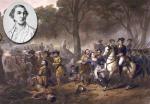
 Disappointed by this response but powerless to challenge it, Washington left for the even more arduous journey home. Meanwhile, his Indian escorts parlayed with Legardeur themselves, perhaps already nervous about the British ability to forestall the French advance to the Forks. The Indians' willingness to listen to the French overtures unsettled Washington, who wrote in his journal, "I can't say that ever in my Life I suffer'd so much Anxiety as I did in this Affair: I saw that every Stratagem which the most fruitful Brain could invent, was practiced, to win the Half-King [Tanacharisson] to their Interest." When Washington delivered his report on the trip a month later in Williamsburg, Dinwiddie rushed it into print, to spread the alarm of French encroachments in the Ohio Country.
Fort LeBoeuf, in late 1753. Washington's mission was to deliver a
letter from Robert Dinwiddie, the lieutenant governor of Virginia, who spoke for the British Crown's interests in the Ohio Valley. Dinwiddie and Washington also had financial reasons for warning the French out of the Ohio Valley. Both were among the gentlemen-speculators wishing to profit from land sales to the settlers in this region once the British secured their claim to it. Washington's trip to Fort LeBoeuf from
Logstown had been through difficult terrain as winter set in on the Allegheny frontier. His small party was accompanied by only four Indians, from the Forks of the Ohio (including Tanacharisson), hardly an impressive show of native support for the British cause. By Washington's own account, Legardeur greeted them politely and listened to the young Virginian's warning to leave the Ohio Country, but upon careful reflection, he sent Washington back with a reply for Dinwiddie stating, "as to the summons you send me to retire, I do not think myself obliged to obey it."
[Original Document]
George Washington
