


Mouse over for marker text
Name:
Fort Presque Isle
Region:
Lake Erie Region
County:
Erie
Marker Location:
6th and Parade Streets, Erie
Dedication Date:
October 1946
Behind the Marker
The French built Fort Presque Isle (modern Erie, Pennsylvania) in summer 1753 to protect the northern terminus of the  Venango Path. It was the first of the French posts built in the Ohio Country, and Tanacharisson, speaking for the Ohio Indians, demanded that it be abandoned, but to no avail. The French burned this post when they retreated from the Ohio Valley in 1759.

In July 1760, Colonel Henry Bouquet built a stockade and blockhouse on this site. Along withFort Pitt, Fort LeBoeuf, and Fort Venango, this post was intended to assert British possession of the Ohio Country, but these fortifications offended the Ohio Indians, who still considered themselves the rightful claimants to the land and believed that the British had bound themselves to vacate the territory once the French were removed.
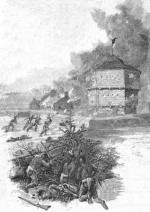
When Pontiac's Rebellion erupted in spring 1763, Fort Presque Isle was one of the first posts to fall to Indian attack. A combined force of Senecas, Ottawas, Hurons, and Chippewas laid siege to it on June 19, and the garrison capitulated a few days later.
Venango Path. It was the first of the French posts built in the Ohio Country, and Tanacharisson, speaking for the Ohio Indians, demanded that it be abandoned, but to no avail. The French burned this post when they retreated from the Ohio Valley in 1759.
This etching depicts the Indian attack on Fort Presque Isle in 1763.
In July 1760, Colonel Henry Bouquet built a stockade and blockhouse on this site. Along with
Fort Pitt, Fort LeBoeuf, and Fort Venango, this post was intended to assert British possession of the Ohio Country, but these fortifications offended the Ohio Indians, who still considered themselves the rightful claimants to the land and believed that the British had bound themselves to vacate the territory once the French were removed. When Pontiac's Rebellion erupted in spring 1763, Fort Presque Isle was one of the first posts to fall to Indian attack. A combined force of Senecas, Ottawas, Hurons, and Chippewas laid siege to it on June 19, and the garrison capitulated a few days later.
Beyond the Marker
